The Old King's Crown vs Root: Which Asymmetric Strategy Board Game Reigns Supreme?
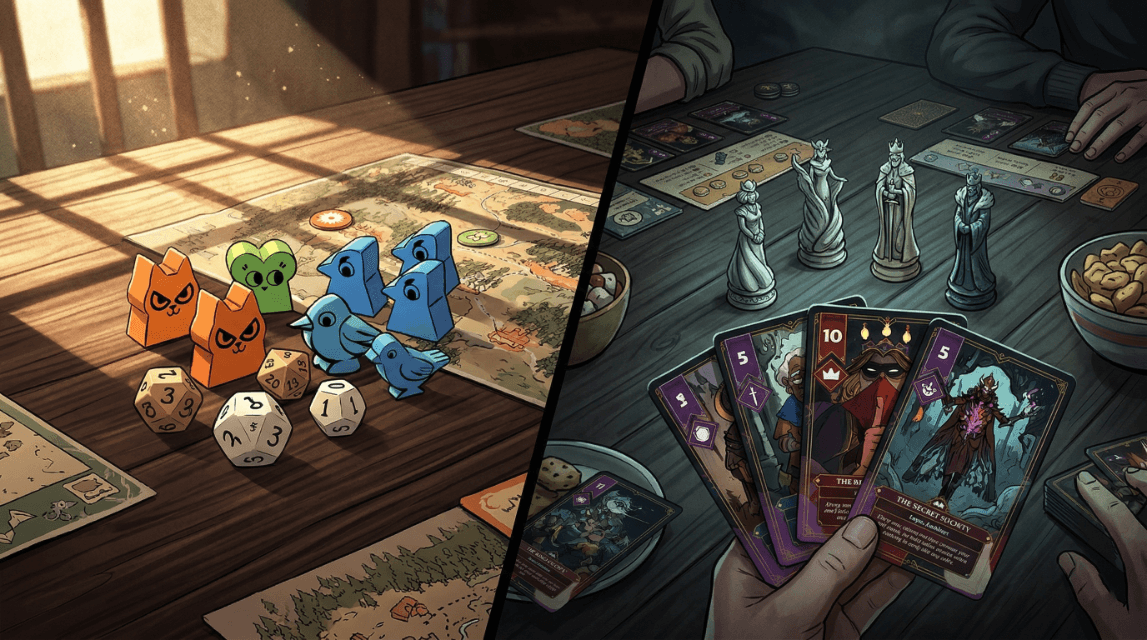
The landscape of asymmetric board games presents a fierce battleground for player attention, and choosing the wrong lifestyle game can result in an expensive box gathering dust on your shelf. For years, the undisputed monarch of high-conflict, disparate-faction gaming has been Leder Games' masterpiece, Root. However, the 2025 release of The Old King's Crown by Eerie Idol Games has introduced a formidable challenger, combining breathtaking artwork with a notoriously deep tactical system.
When your gaming group is ready to commit to a heavy, strategic board game, choosing the right title is critical. While both games share a reputation for gorgeous aesthetics, steep learning curves, and brutal player interaction, their mechanical hearts could not be more distinct. This comprehensive comparative analysis explores the tactical nuances of both titles to determine which experience best suits your specific game night dynamics.
Strategic Foundations: Map Dominance vs. Lane Battling
To understand the core divergence between these two titans, you must look at how conflict is resolved and how space is managed.
Root is the quintessential "dudes on a map" area control game. The board state is entirely open; every warrior, building, and cardboard token is visible to everyone at the table. The asymmetry lies in how the factions operate within that shared space. The Marquise de Cat builds an industrial engine, while the Woodland Alliance ferments hidden sympathy to trigger explosive revolts. The strategy in Root revolves around macroscopic spatial positioning, action efficiency, and anticipating opponent movements multiple turns in advance.
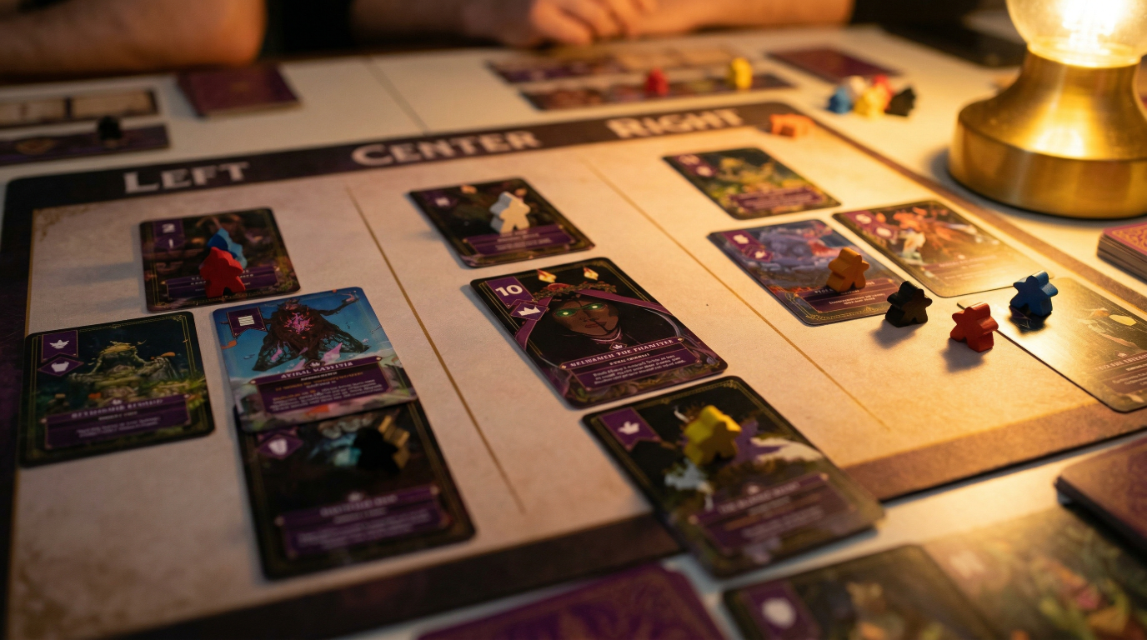
The Old King's Crown, conversely, is fundamentally a lane battler driven by hidden information and bluffing. The conflict takes place across three specific regions of a beautiful, oversized board during the Summer phase. Instead of moving wooden warriors, players deploy beautifully illustrated, tarot-sized cards face-down from a 14-card starting deck (numbered 0 to 10). When these cards are revealed, complex timing windows and faction-specific abilities trigger in rapid succession.
Pro tip: In The Old King's Crown, players must meticulously track which high-value cards opponents have already played or bid away in earlier rounds. Card counting is not just an advantage; it is an absolute necessity for survival in the late game.
The Art of Conflict: Kingmaking vs. Poker-School Psychology
The primary criticism historically leveled against Root by the board gaming community is its susceptibility to "kingmaking." Because the game state is open and calculating Victory Points is straightforward, players must actively communicate, negotiate, and sometimes beg to stop a runaway leader. If the table fails to recognize that the Eyrie Dynasties are one turn away from victory, the game ends abruptly. Root relies heavily on table talk, fragile alliances, and mutually assured destruction. It requires a playgroup willing to ruthlessly police each other.
The Old King's Crown shifts the psychological burden away from open diplomacy and directly into deduction. The game hinges entirely on the tension of the unseen. During the Spring phase, players must bid their valuable faction cards face-down to claim advantageous kingdom locations along the Great Road. Bidding a high card guarantees a powerful location, but it permanently removes that strong card from your combat deck for the remainder of the game.
This mechanism creates a brutal, poker-like atmosphere. You are constantly asking yourself: "Is that face-down card in the wilderness lane a low-value bluff, or a devastating ambush?" The interaction here is fiercely direct and relies on out-thinking your opponent in the moment, rather than organizing a table-wide coalition to stop the leader.
Faction Complexity and The 2026 Expansions
Both games require immense dedication to master, but they distribute their complexity—and the mental load required to play them—quite differently.
In Root, the burden of knowledge is collective. To play effectively, you must not only understand your own faction's mechanics but also possess a deep understanding of how the other three to five factions score their Victory Points. This complexity is significantly expanding with the 2026 Homeland Expansion, which introduces the Lilypad Diaspora—a frog faction balancing peaceful settlement tokens against militant reprisals—and the Twilight Council, bat politicians who use governing assemblies to enforce edicts and shut down battles entirely. Keeping track of these intersecting rulesets requires a dedicated gaming group.
The Old King's Crown keeps its complexity slightly more internalized. The four base factions—The Nobility, The Clans, The Uprising, and The Gathering—all utilize the same fundamental mechanism of numbered cards to resolve clashes. The asymmetry emerges from five unique faction powers and the bespoke cards available for purchase throughout the game. The learning curve is undeniably steep (it currently carries a 3.65 complexity rating on BoardGameGeek), but once the core rhythm of Deployment and Revelation clicks, the game flows seamlessly without needing to constantly check the rulebook.
Setting the Perfect Ambiance
If you are planning to table either of these massive games, the atmosphere of your game night matters. Both games benefit from an immersive environment that matches their distinct themes.
Pro tip: To elevate your game night, skip the generic Spotify playlists. We highly recommend tuning into the MeepleMelodies YouTube channel. They provide extended, custom-curated background ambiance tracks specifically designed for tabletop gaming.
Side-by-Side Comparison Breakdown
Feature | Root | The Old King's Crown |
Core Mechanism | Area control, action programming | Lane battling, simultaneous reveal |
Information | Open and deterministic | Hidden, driven by bluffing |
Player Interaction | Diplomatic, high table-talk | Direct confrontation, psychological |
Asymmetry Level | Extreme (entirely different rulesets) | Moderate (shared core mechanics, unique powers) |
Best Player Count | 4 players (highly dependent on group) | 2 to 3 players (4 can become overly chaotic) |
The Verdict: Which Box Belongs on Your Shelf?
The decision between these two masterpieces ultimately comes down to the psychological preferences of your gaming group.
Root is the superior choice if your group thrives on politics, negotiation, and overarching geopolitical strategy. It heavily rewards consistent playgroups who enjoy dissecting a shared ecosystem and arguing over who presents the biggest threat at the table. If you want a vibrant, chaotic war of words and woodland creatures, Root remains unmatched.
The Old King's Crown is the definitive choice if you prefer intense tactical showdowns, deduction, and card-driven combos. It is perfect for players who want the heavy asymmetry of Root but prefer their conflicts settled through clever hand management and out-bluffing their opponents rather than relying on dice rolls and fragile alliances. It also offers an incredibly robust solo mode, making it a safer investment if your group struggles to meet regularly.
Whichever kingdom you choose to conquer, remember that you can easily log your sessions, track faction win rates, and prove once and for all who the best player is using the MeepleShelf Score Tracker. Access it directly from your browser—no app installation required—and start building your game history today.
Sign in to rate this post.
You Might Also Like
Comments
Sign in to leave a comment
Sign In